GEOTECHNICAL ENGINEERING
NEWARK
HomeInvestigationCPT (Cone Penetration Test)

CPT Testing Newark — Cone Penetration Test for Site Characterization

Evidence-based design. Reliable delivery.

LEARN MORE

Newark’s industrial past left a patchwork of fill, buried debris, and urban soils that make every project a puzzle. From the Passaic River floodplain to the glacial till near Branch Brook Park, the subsurface changes fast. That’s why a CPT test is our go-to tool here. It delivers continuous soil data without the mess of cuttings. We run the cone through soft organic silts, loose sands, and stiff varved clays that define this region. For deep foundation design near the Ironbound or warehouse conversions downtown, we pair the CPT with a liquefaction assessment when seismic demand under ASCE 7 controls the structural risk.

A single CPT sounding replaces three borings when the goal is a continuous stratigraphic profile.
Our service areas

How we work

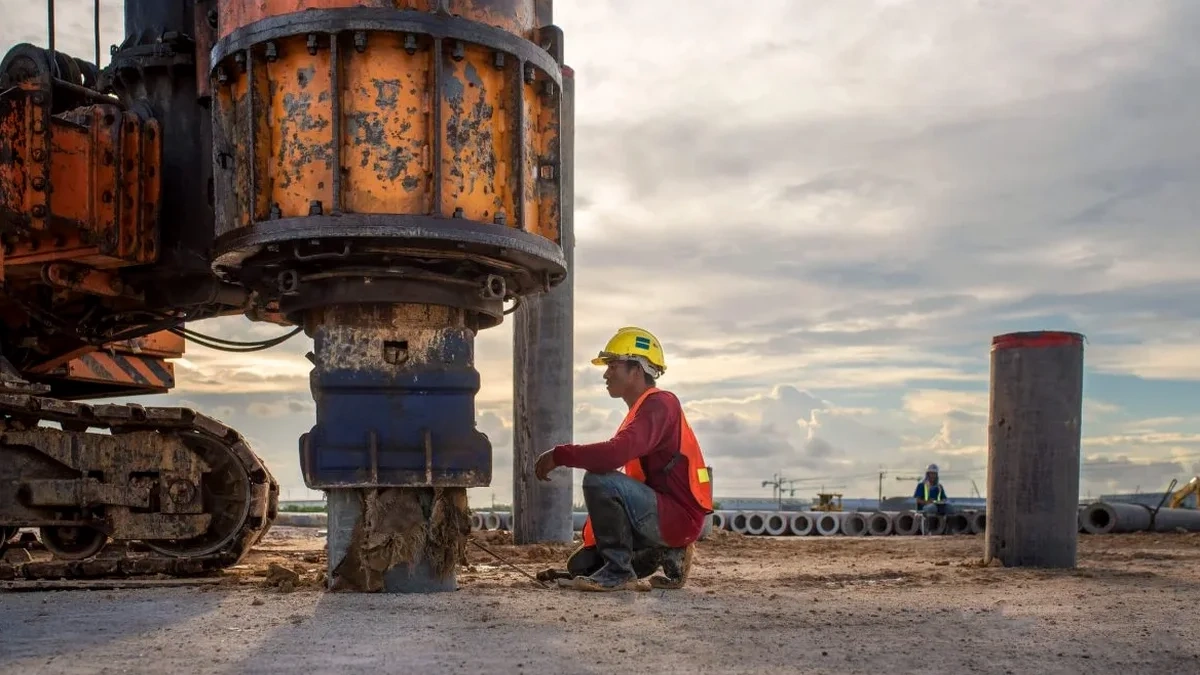
We recently ran a CPT campaign for a five-story mixed-use building on Ferry Street. The site sat on old meadow mat and urban fill. The cone refusal hit at 42 feet on a dense glacial layer. Pore pressure data showed a draining silt seam at 18 feet that the borings missed. That single detail changed the foundation concept from deep piles to a ground improvement strategy. In these conditions, we often recommend combining the CPT with stone columns to mitigate settlement in the compressible zone. Our rigs are 20-ton trucks with electric cones, so we measure tip resistance, sleeve friction, and pore pressure simultaneously. Setup takes under an hour. We can push 100 feet in clean sands. In Newark’s compact till, refusal typically occurs around 50 to 70 feet.
CPT Testing Newark — Cone Penetration Test for Site Characterization
Technical reference — Newark

Local geotechnical context

ASCE 7-22 and the IBC require site-specific shear wave velocity or CPT data for Site Class determination in seismic areas. Newark sits in a moderate-to-high seismic hazard zone due to the Ramapo Fault system. Skipping the CPT means relying on default Site Class D assumptions, which can inflate seismic design forces by 40 percent or more. We’ve also seen undocumented fill layers in the East Ward that triggered unexpected settlement claims. A CPT log gives you a defensible soil behavior type profile that holds up during peer review. The biggest risk isn’t the test cost. It’s designing on assumptions that the subsurface won’t honor.

Need a geotechnical assessment?

Reply within 24h.

Email: contact@geotechnical-engineering.vip

Relevant standards

ASTM D5778 — Standard Test Method for Electronic Friction Cone and Piezocone Penetration Testing of Soils, ASCE 7-22 — Minimum Design Loads and Associated Criteria for Buildings and Other Structures, IBC 2021 — International Building Code, Chapter 18: Soils and Foundations, ASTM D2487 — Standard Practice for Classification of Soils for Engineering Purposes

Technical data

ParameterTypical value
Cone TypePiezocone (CPTu) — u2 position
Tip Resistance (qc)Up to 100 MPa in dense strata
Sleeve Friction (fs)0 to 1.5 MPa typical
Pore Pressure (u2)Measured behind the cone tip
Standard Push Rate20 mm/s ± 5 mm/s
Max Depth (Newark till)50–70 ft typical refusal
Data IntervalReadings every 10 mm

Common questions

How much does a CPT test cost in Newark?

For a standard CPTu sounding in Newark, budget between US$180 and US$210 per hour of rig time. Mobilization and traffic control in dense areas like the Ironbound may add to the total. A single 60-foot push typically takes two hours on site.

What’s the difference between CPT and SPT for Newark projects?

CPT provides a continuous, digital record of soil response every 10 mm. SPT gives a blow count every 2.5 or 5 feet. In Newark’s interbedded silts and sands, the CPT catches thin layers that SPT intervals miss entirely. CPT also measures pore pressure, which SPT cannot.

Can you do CPT testing inside existing buildings in Newark?

Yes, with our compact push rigs. We need minimum headroom of 12 feet and access for a tracked unit. We’ve tested inside warehouse basements and industrial facilities throughout Essex County.

How deep can a CPT rig push in Newark soils?

In the sandy alluvium near the Passaic, we routinely reach 80 to 100 feet. In the glacial till that underlies much of downtown Newark, refusal typically stops the cone between 50 and 70 feet, depending on the boulder content.

Location and service area

We serve projects in Newark and surrounding areas.

View larger map