GEOTECHNICAL ENGINEERING
NEWARK
HomeLaboratoryGrain size analysis (sieve + hydrometer)

Grain Size Analysis (Sieve + Hydrometer) for Newark Construction Projects

Evidence-based design. Reliable delivery.

LEARN MORE

A developer recently broke ground on a mixed-use building near the Passaic River, only to discover the fill material varied wildly from one corner of the lot to the next. The spec called for a well-graded sand, but visual inspection alone couldn't confirm gradation or silt content. That's where a complete grain size analysis with hydrometer becomes non-negotiable. Newark's subsurface is a patchwork of glacial outwash, estuarine deposits, and urban fill, and guessing the particle distribution can derail compaction specs, drainage design, and even seismic classification. Our lab runs the full curve from coarse gravel down to clay colloids using ASTM D6913 sieves and ASTM D7928 hydrometer sedimentation, giving your geotechnical engineer the numbers to back every decision. Before you pour, pair the gradation data with in-situ density testing to verify field compaction meets the lab-derived optimum.

A 10% error in silt content can double the predicted settlement in a mat foundation — the hydrometer step isn't optional, it's essential.
Our service areas

How we work

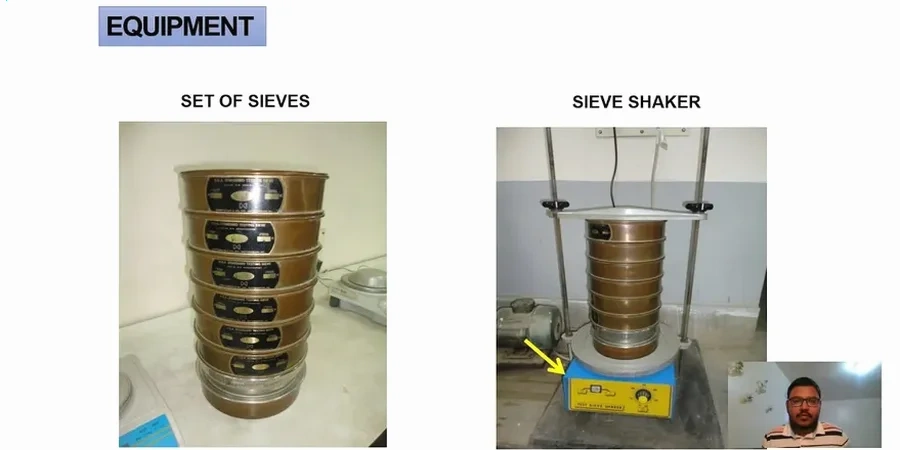
The most expensive mistake we see in Newark is a contractor accepting a 'sieve-only' report and assuming the material is clean. Without the hydrometer fraction, a silty sand can be misclassified as SP when it's actually SM, changing everything from permeability assumptions to frost susceptibility under ASCE 32. Our combined analysis eliminates that blind spot. We dry, wash, and mechanically shake samples through a stack of 8-inch and 12-inch sieves, then run the minus #200 fraction through a 152H hydrometer with dispersant, plotting the full curve from 75 mm down to 0.001 mm. Every report includes the coefficient of uniformity, coefficient of curvature, and USCS classification per ASTM D2487. For sites near the Hackensack River where organic silts complicate the profile, the data often guides the need for deep excavation monitoring when cuts extend below the water table.
Grain Size Analysis (Sieve + Hydrometer) for Newark Construction Projects
Technical reference — Newark

Local geotechnical context

Newark sits at the junction of two distinct geological provinces — the Piedmont to the west and the coastal plain to the east, with the Meadowlands basin in between. A site on deep clay near Weequahic Park behaves nothing like a site on glacial till near Branch Brook, yet both demand precise gradation curves for defensible design. Underestimating silt content in a Meadowlands borehole can lead to an over-optimistic permeability value, which in turn undersizes the dewatering system and floods the excavation. Overestimating the gravel fraction in an urban fill sample might lead a designer to skip the stone columns that would have mitigated differential settlement. Our lab has analyzed thousands of Newark-area samples, and we know the local materials: the reddish-brown residual silts of the Passaic Formation, the varved clays in the former lakebed deposits, and the heterogeneous dredge spoils common along the waterfront. That local pattern recognition adds a layer of quality control that a generic out-of-state lab simply cannot provide.

Need a geotechnical assessment?

Reply within 24h.

Email: contact@geotechnical-engineering.vip

Relevant standards

ASTM D6913/D6913M-17: Standard Test Methods for Particle-Size Distribution (Gradation) of Soils Using Sieve Analysis, ASTM D7928-21e1: Standard Test Method for Particle-Size Distribution (Gradation) of Fine-Grained Soils Using the Sedimentation (Hydrometer) Analysis, ASTM D2487-17e1: Standard Practice for Classification of Soils for Engineering Purposes (Unified Soil Classification System), AASHTO T 88 (where applicable for DOT work in New Jersey), USACE EM 1110-2-1906 (Corps of Engineers laboratory soil testing procedures)

Technical data

ParameterTypical value
Test method (coarse fraction)ASTM D6913 (dry/wash sieving)
Test method (fine fraction)ASTM D7928 (152H hydrometer)
Particle size range75 mm to 0.001 mm (clay colloid range)
Sieve stack used3", 2", 1.5", 1", 3/4", 3/8", #4, #10, #20, #40, #60, #100, #200
Dispersing agentSodium hexametaphosphate (ASTM D422 compatible)
Data reportedPercent gravel, sand, silt, clay; Cu, Cc; USCS symbol and group name
Sample mass (minimum)500 g for fine-grained; up to 5 kg for coarse gravels
Turnaround time3–5 business days (expedited available)
Lab accreditationISO/IEC 17025 (A2LA accredited, NJDEP certified)

Common questions

Why do I need the hydrometer analysis? Can't I just use the sieve data?

The sieve analysis stops at the #200 sieve (0.075 mm), so it cannot distinguish silt from clay or quantify the true fines fraction. Newark's estuarine and glacial lake deposits often contain 40–80% fines, and without the hydrometer you cannot assign a correct USCS group symbol, predict permeability, or assess frost susceptibility. The hydrometer extends the curve down to 0.001 mm, giving you the full picture needed for settlement and drainage calculations under IBC Chapter 18.

What does grain size analysis cost in Newark?

A combined sieve and hydrometer analysis typically runs between US$100 and US$180 per sample, depending on sample condition and whether wash sieving is required. Expedited turnaround and multi-sample project discounts are available. We always provide a firm quote before you ship the samples.

How should I prepare and ship soil samples from my Newark site?

Keep the sample in a sealed, labeled plastic bag inside a sturdy container to prevent moisture loss and cross-contamination. For the combined test we need a minimum of 500 grams of material passing the #4 sieve, but sending the full jar or bagged split spoon sample is always safer. If you are sampling near the Passaic or Hackensack rivers, double-bag the material — those organic silts can leak and contaminate adjacent samples during transport.

How long does a grain size analysis take, and can you rush it?

Standard turnaround is 3 to 5 business days from sample receipt. We maintain a dedicated hydrometer bench with multiple sedimentation cylinders, so we can process up to 12 samples simultaneously without cutting corners on the ASTM-required reading intervals. Rush service delivers results in 24–48 hours for an additional fee, which many Newark contractors use when a concrete pour is on hold pending fill approval.

Location and service area

We serve projects in Newark and surrounding areas.

View larger map