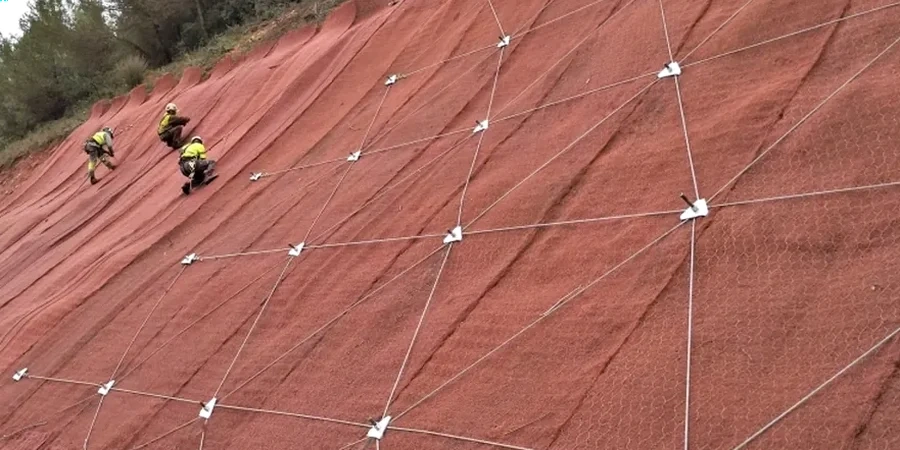
The geology under Newark tells a story of glacial Lake Passaic and the basalt ridges of the Watchung Mountains. This mix of deep lakebed silts, varved clays, and weathered shale creates a landscape where slopes can fail gradually or, in some cases, without much warning. When a contractor calls us about a cut that's slumping near the Passaic River or an embankment that's moving after heavy rain, the first thing we check is the pore pressure regime. In our experience, many slope issues in the area trace back to the quick drainage shifts you get in the Meadowlands fill and the underlying glacial deposits. A solid stability evaluation here means looking beyond the surface—because what's 20 feet down in the varved clay layer often controls the failure mechanism. We combine field data from SPT drilling with lab shear strength tests to build a model that reflects actual Newark subsurface conditions, not just textbook assumptions.
A Newark slope doesn't just slide; it creeps, drains, and reacts to the water table before it fails. You have to read the pore pressures.